

Does Panax Ginseng Block DHT? What the Science Says
Does Panax Ginseng Block DHT?
Yes, but not in the way most people assume. Panax ginseng, particularly Red Ginseng, does not lower DHT (dihydrotestosterone) production the way a pharmaceutical 5-alpha-reductase inhibitor like finasteride does. Instead, research suggests its ginsenosides work through a different anti-androgenic route: helping prevent DHT from binding to receptors at the hair follicle, and suppressing some of the downstream enzymes and signaling pathways that allow DHT to shrink follicles once it does bind.
This is a meaningful distinction, not a disclaimer. DHT causes hair loss in two possible places: at the point where it is produced (the enzyme step) and at the point where it acts on the follicle (the receptor and signaling step). Finasteride targets the first. Ginseng research points more toward the second.
How Panax Ginseng Affects DHT and Hair Follicles
Panax ginseng contains compounds called ginsenosides, which have been studied for effects on cell growth, circulation, and hormonal signaling. Laboratory research has examined how these compounds interact with dermal papilla cells, the cells at the base of the hair follicle that regulate the growth cycle and respond to androgen signals.
Some of this research suggests ginsenosides may:
- Interfere with DHT binding to androgen receptors in the follicle, a genuinely anti-androgenic mechanism
- Suppress enzymatic activity involved in DHT-driven follicle miniaturization
- Support proliferation of dermal papilla cells even under androgenic stress
- Help extend the anagen (active growth) phase of the hair cycle
- Improve local circulation to the scalp
- Provide antioxidant support against oxidative stress at the follicle
It is worth noting that most of this evidence comes from laboratory and animal studies rather than large-scale human clinical trials, so the mechanism is promising but not yet established with the same weight of evidence behind pharmaceutical DHT blockers.
Panax Ginseng vs. True DHT Blockers
| Factor | Panax Ginseng | Finasteride (Pharmaceutical) |
|---|---|---|
| Mechanism | May inhibit DHT receptor binding and downstream signaling at the follicle | Inhibits 5-alpha-reductase enzyme to reduce DHT production |
| Lowers DHT levels in the body | No | Yes |
| Anti-androgenic action at the follicle | Suggested by lab research | Established |
| Prescription required | No | Yes |
| Reported side effects | Rare, generally well tolerated topically | Possible sexual side effects, hormonal changes |
| Typical use | Topical, part of a broader routine | Oral, standalone medication |
This is why Panax ginseng is best described as having anti-androgenic properties rather than being a true DHT blocker in the pharmaceutical sense. It does not reduce how much DHT the body produces, but it may reduce how effectively that DHT can act on the follicle once it is present. This mirrors how rosemary oil's DHT-related activity has also been studied, though through a somewhat different mechanism.
Why Panax Ginseng Is Often Paired With Other Ingredients
Because Panax ginseng's anti-androgenic action works at the receptor and signaling level rather than reducing DHT production itself, it is commonly combined with ingredients like rosemary oil and peppermint oil, which are separately studied for circulation and follicle stimulation. Pairing ingredients that approach hair thinning from different angles is a common strategy in multi-ingredient formulations.
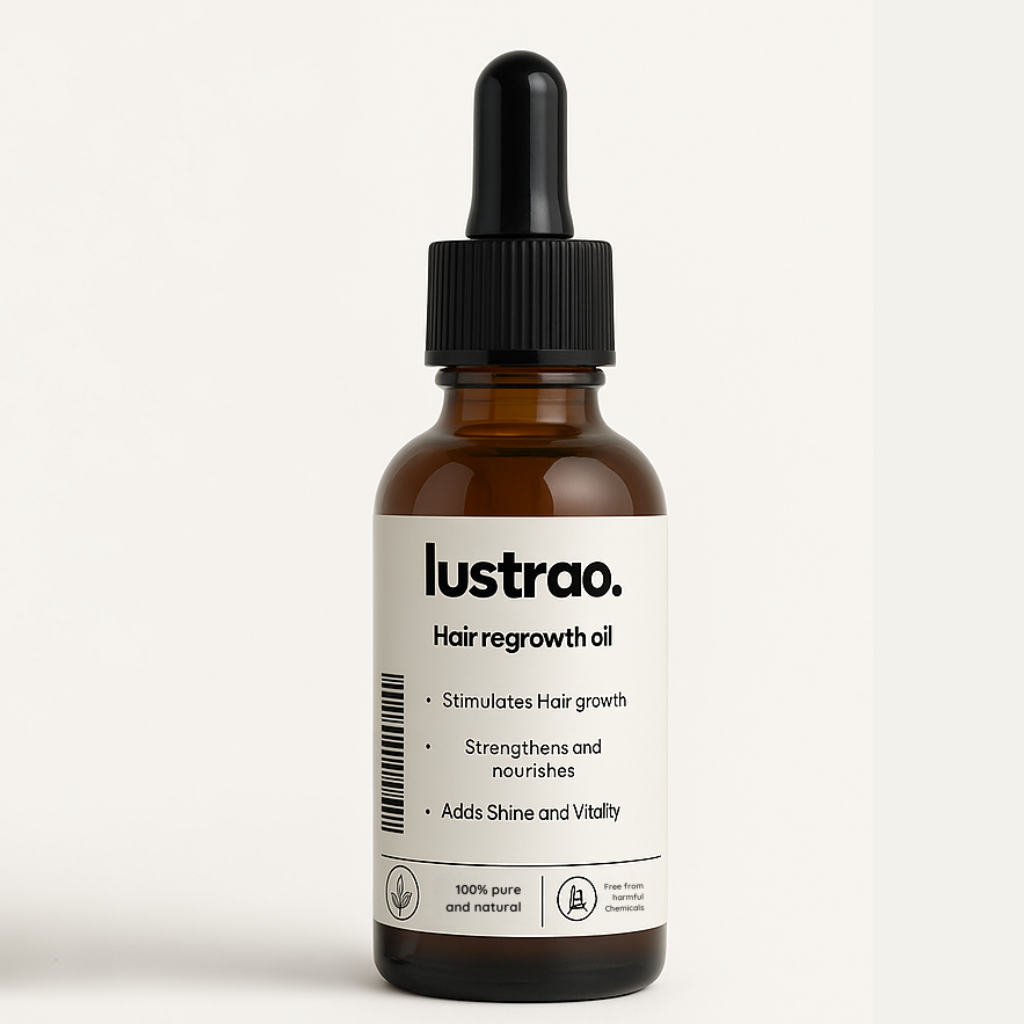
Lustrao Hair Regrowth Oil combines Panax ginseng with rosemary oil, peppermint oil, castor oil, olive oil, and argan oil, so the formula addresses several angles of androgen-related and circulation-related thinning at once, rather than relying on a single mechanism.
A Realistic Expectation
Dr. Elena Marsh, a cosmetic formulation scientist. "It works best as part of a broader scalp care strategy alongside other DHT-related ingredients, not as a stand-alone replacement for a prescribed DHT blocker."
Consistency also matters more than any single ingredient. Hair growth cycles move slowly, and most botanical ingredients need months of steady use before changes in density become noticeable. See our full natural hair growth routine guide for how to build ginseng into a complete regimen.
Frequently Asked Questions
Does Panax ginseng lower DHT levels in the scalp?
Not in terms of production. Current research does not show that Panax ginseng reduces how much DHT the body makes. Instead, ginsenosides appear to interfere with DHT's ability to bind to receptors at the follicle and may suppress some of the enzymatic activity involved in DHT-driven miniaturization, which is a genuinely anti-androgenic effect even though it works differently from finasteride.
Can Panax ginseng help with androgenetic alopecia?
Some studies suggest ginsenosides may support dermal papilla cell activity and interfere with DHT receptor binding, both relevant to androgenetic alopecia. It is a supportive, anti-androgenic ingredient rather than a replacement for treatments that directly reduce DHT production.
Is Panax ginseng safe to use daily?
Topical Panax ginseng extract is generally well tolerated for daily use in most people. As with any new ingredient, a patch test is a sensible first step.
What is the difference between Panax ginseng and red ginseng for hair?
Red ginseng is a processed form of Panax ginseng and some studies use red ginseng extract specifically. Both are typically discussed under the same ginsenoside research base.
Should I use Panax ginseng instead of minoxidil or finasteride?
Panax ginseng is not a substitute for medically studied treatments like minoxidil or finasteride. It is better positioned as a complementary, natural ingredient within a broader hair care routine. Speak with a healthcare provider about treatments for diagnosed hair loss.
How long does it take to see results from Panax ginseng?
As with most botanical hair ingredients, consistent use over three to six months is typically needed before density changes become noticeable.
What products contain Panax ginseng at effective levels?
Formulation matters, since concentration and delivery affect results. Lustrao Hair Regrowth Oil includes Panax ginseng alongside rosemary oil, peppermint oil, castor oil, olive oil, and argan oil.
Can Panax ginseng be combined with rosemary oil?
Yes. The two are frequently paired because they work through different mechanisms, ginseng supporting anti-androgenic activity and follicle cell health, and rosemary oil supporting circulation and DHT-related pathways. Learn more in our guide on how to use rosemary oil for hair growth.
Explore how Panax ginseng works alongside rosemary oil, peppermint oil, and castor oil in the Lustrao Hair Regrowth Oil, part of the Hair Growth Duo and Trio Consistency Kits.
Share