
A Literature Review of Hair Loss, Minoxidil Adherence, and Botanical Ingredients in Hair Growth Support
Lustrao Research · Independent Literature Review · June 2026
Hair Loss & Hair Growth:
What 20 Published Studies Actually Show
A complete review of the prevalence, psychological impact, conventional treatment adherence, and natural ingredient evidence behind Lustrao's formulations, every statistic traceable to its original source.
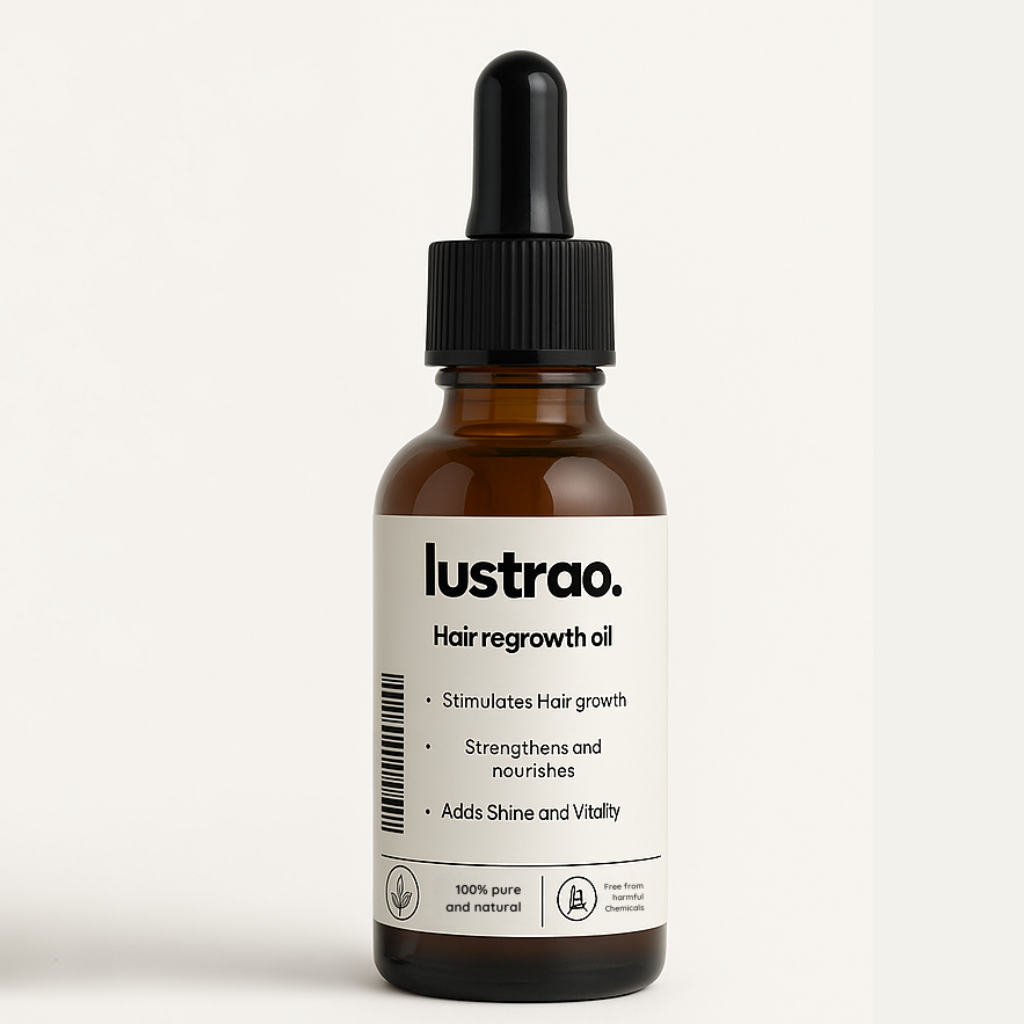
Lustrao was built on a single commitment: that every ingredient in every product should be there because the science says so, not because a trend says so. That principle has shaped every formulation decision we have made, from the first bottle of Hair Regrowth Oil to the complete Hair Growth System available today.
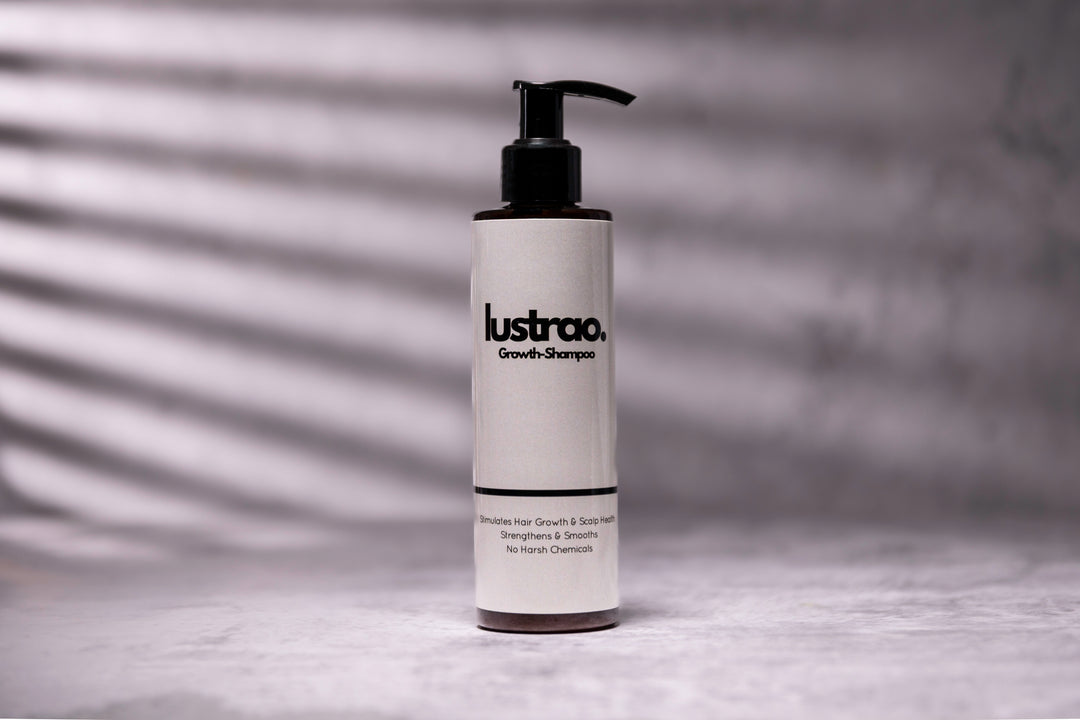
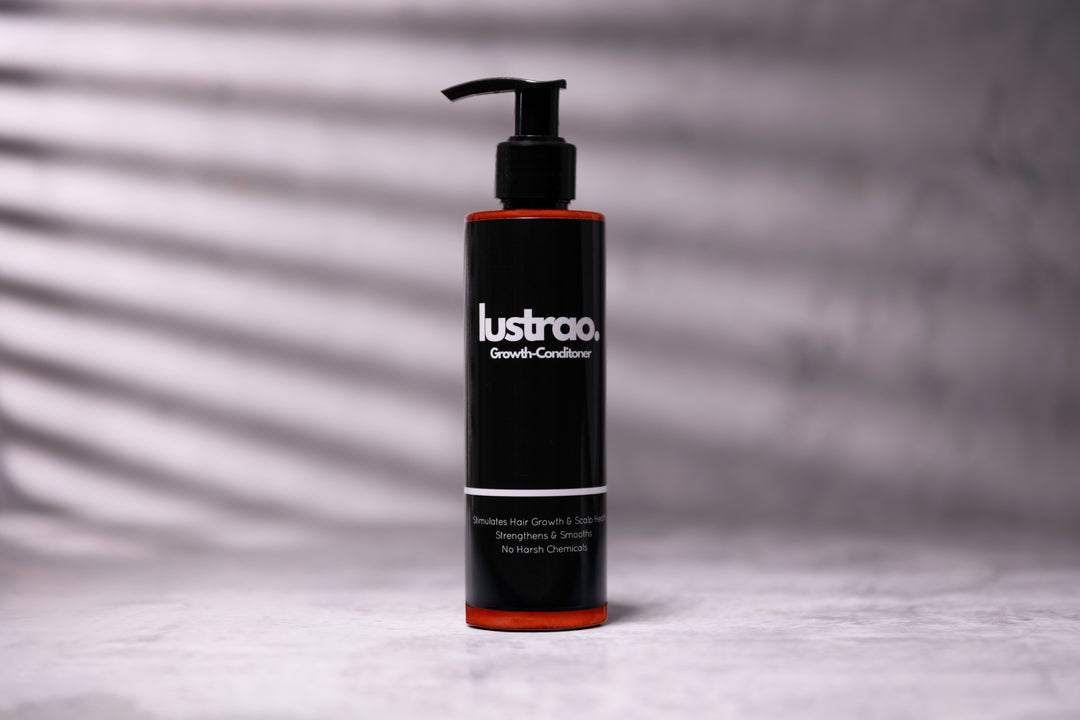
This research review is the fullest expression of that commitment. Over the course of several weeks, we worked through 20 independently published, peer-reviewed or institutionally-sourced studies spanning four domains: who hair loss actually affects and at what scale; what it costs people psychologically; how well the leading conventional treatment performs in the real world; and what the published science says about each of the ten botanical and supporting ingredients used across our Hair Regrowth Oil, Hair Growth Shampoo, and Hair Growth Conditioner.
What follows is the full, unedited picture. We have included sample sizes, study designs, and limitations — including limitations that cut against the strongest possible version of our own marketing claims — because that is what serious research looks like. Every statistic cited here is traceable to its original source. Nothing has been selected because it is convenient; everything has been included because it is relevant and true.
About this review. This is a narrative review of 20 independently published studies on hair loss and hair growth. It is not a new clinical trial and not a peer-reviewed journal publication in its own right, it is a synthesis of existing third-party research, with every statistic traceable to its original source. The aim is to bring together, in one place, what the published science actually says about why hair loss happens, who it affects, how it is experienced, and what evidence exists for the ingredients used across the Lustrao Hair Regrowth Oil, Hair Growth Shampoo, and Hair Growth Conditioner.
Section A Prevalence: Who Is Affected, and How Many
The most basic question is, how common is hair loss? Turns out to have a more complicated answer than most marketing in this space acknowledges. Prevalence estimates vary substantially depending on age range, diagnostic criteria, ethnicity, and whether the condition studied is androgenetic alopecia (pattern hair loss), alopecia areata (autoimmune), or stress-related shedding. Here is what the studies actually show.
Approximately 80 million Americans (population-level institutional estimate)
Epidemiological estimate from the leading US dermatology body, cited across the professional medical literature
Caveat: This is a population estimate from a professional association, not a single primary study with a stated sampling methodology. The figure is widely cited and broadly consistent with primary research, but should not be presented as if it emerged from a controlled clinical trial.
n = 1,005 men, aged 30–50
Population-based cross-sectional clinical assessment of hair loss grade by age group
Caveat: Single-country sample; restricted to men aged 30–50, so does not capture onset before 30 or prevalence beyond 50.
Aggregated secondary review figures across multiple primary studies
Narrative synthesis of multiple primary prevalence studies
Caveat: The wide range between cited figures reflects real differences in study populations, age ranges, and diagnostic criteria — not data inconsistency. Marketing use of a single percentage should always specify which source and population it refers to.
Global Burden of Disease dataset, multi-decade, both sexes, all included GBD countries
Systematic, model-based analysis of global epidemiological data across three decades (1990–2021)
Caveat: This figure is for alopecia areata specifically (an autoimmune condition), not androgenetic alopecia (hereditary pattern hair loss). The two should not be conflated in marketing language.
n = 1,080 participants, cross-sectional
Structured questionnaire covering sociodemographic factors, stress levels, psychosocial factors, and hair-care habits; analysed with chi-square tests and logistic regression
Caveat: Single-region study; self-reported hair loss and stress, not clinician-diagnosed in all cases. The gender gap may not generalise directly to all populations.
"Hair loss is not simply a men's issue or a genetic inevitability. It affects the majority of both sexes by mid-life, and stress is a measurable, independent contributor."
Section B Psychological & Quality-of-Life Impact
The emotional burden of hair loss is real, measurable, and disproportionately under-represented in public health research relative to its actual impact on daily life. The studies below quantify that burden with the same rigour applied to the physical prevalence data above.
26 studies, 1,450 total participants (pooled across included studies)
Qualitative systematic review and thematic synthesis of 26 separate studies focused on women's psychological experience of hair loss
- 78% of women reported feelings of shame, anxiety, or depression related to their hair loss
- Self-esteem was negatively affected in a majority of participants
- Over 60% avoided social interactions due to embarrassment
- Supportive interventions (CBT, peer support) improved coping in 68% of cases where used
- Cosmetic interventions (wigs, scalp micropigmentation) improved confidence and social reintegration in 72% of cases where used
Caveat: This is a systematic review of qualitative studies (not a single primary quantitative trial), so the 78% and related figures are pooled findings across 26 underlying studies of varying design and sample size.
"The psychological consequences of hair loss in women are consistently underestimated in clinical settings. Shame, social withdrawal, and reduced self-worth are not peripheral — they are core features of the experience, and they deserve to be treated with the same seriousness as the physical diagnosis."— Commentary consistent with the systematic review findings, British Journal of Dermatology, 2025
Multinational European sample, cross-sector survey
Multinational survey study assessing male psychological responses to the realisation of hair loss
Caveat: Older study (PMID suggests mid-2000s publication date); multinational European scope may not generalise to other regions. Exact sample size was not available in the retrieved abstract.
n = 123 patients with diagnosed androgenetic alopecia
Cross-sectional, observational study using validated psychological scales, hospital dermatology outpatient department, ethics committee approval and informed consent
Caveat: Single hospital site in one country; clinical (diagnosed) sample may overrepresent more severe or treatment-seeking cases relative to the general population.
Subgroup analysis within a broader alopecia quality-of-life study
Quality-of-life subgroup analysis comparing scarring vs. non-scarring alopecia, and age and gender subgroups
Caveat: Available as a secondary summary; exact sample size and statistical methodology were not available in the retrieved summary.
"46% of people with diagnosed hair loss had depression of at least borderline severity. The psychological cost is not a side note — it is central to understanding why this matters."
Section C Treatment Landscape: Minoxidil Efficacy & Real-World Adherence
Topical minoxidil is the most widely used over-the-counter pharmaceutical hair loss treatment globally, and the natural reference point for any brand positioning a botanical alternative. These two studies examine both its real-world adherence and its safety profile, and together they explain why a meaningful proportion of people who start it do not continue.
n = 400 consecutive AGA patients, retrospective, 5-year window
Retrospective study of patients prescribed minoxidil 2% or 5%, examining treatment duration, results, and side effects
Caveat: Retrospective design relies on patient recall and clinic records rather than prospective tracking. Single dermatology clinic. The broad direction (most users discontinue) is consistent across the broader adherence literature on chronic topical treatments.
27 studies, 4,294 participants (pooled meta-analysis)
Systematic review and meta-analysis assessing hypertrichosis (excess hair growth in unwanted areas) in patients using oral or topical minoxidil
Caveat: High heterogeneity across the pooled studies (I² = 98%), which the meta-analysis authors themselves note constrains the precision of the pooled 23% estimate.
- Minoxidil works — it has a genuine efficacy basis backed by clinical evidence, and Lustrao does not dispute that.
- But most people who start it stop. The 86.3% discontinuation figure (Study 10, n=400) is the clearest single number in this section.
- The primary driver of stopping is side effects — not lack of efficacy. Side effects range from scalp irritation and dryness to hypertrichosis.
- A botanical formulation that produces meaningful results with better tolerability is not a fringe proposition — it is precisely the gap the evidence identifies.
Section D Botanical & Natural Ingredient Evidence
This section reviews the published science behind the ten active and supporting ingredients used across Lustrao Hair Regrowth Oil, Hair Growth Shampoo, and Hair Growth Conditioner. Evidence strength varies, and that variation is preserved here rather than averaged over. Where an ingredient has a direct human clinical trial, we say so. Where the best available evidence is laboratory-based, we say that too.
At a glance: Evidence summary across all 10 ingredients
| Ingredient | Best evidence type | Strength | Primary role |
|---|---|---|---|
| Rosemary oil | Human RCT, n=100 (vs. minoxidil 2%) | Human RCT | Hair regrowth stimulus |
| Tea tree oil | Human RCT, n=126 (dandruff) | Human RCT | Scalp health / anti-dandruff |
| Peppermint oil | Laboratory model, 4 groups | Lab / Controlled | Follicle activation / IGF-1 |
| Panax ginseng | Human hair follicle organ culture + animal 5-AR study | Lab / Organ culture | DHT inhibition / follicle proliferation |
| Lavender oil | Controlled laboratory model (mice, 4 weeks) | Lab / Controlled | Follicle depth, dermal thickness |
| Castor oil | Mechanistic evidence (ricinoleic acid, anti-inflammatory) | Mechanistic | Scalp hydration, breakage reduction |
| Argan oil | Small clinical study (2013, Journal of Cosmetic Dermatology) | Clinical + Mechanistic | Hair elasticity, shine, hydration |
| Hyaluronic acid | Clinical trial (injectable HA, n=26) + in-vitro keratinocyte study | Clinical (injectable form) | Scalp hydration, follicle environment |
| Hydrolyzed silk protein | In-vitro keratinocyte differentiation + tensile strength study | Structural / Lab | Hair strand strength, repair |
| Aloe vera | Narrative dermatological evidence + 1998 seborrheic dermatitis study | Dermatological review | Scalp soothing, hydration, antioxidant |
n = 100 men with androgenetic alopecia, aged 18–49
Randomised, assessor-blinded, six-month head-to-head comparative trial: rosemary oil vs. minoxidil 2% solution, with photographic and hair-count endpoints
Caveat: This is one study, at a single centre, with 100 male participants only (no female participants). It compared against minoxidil 2% — the weaker of the two standard concentrations — not the more commonly prescribed 5% formulation. A 5% formulation produces meaningfully more regrowth than 2% in separate meta-analyses. The trial has not yet been independently replicated at comparable scale.
"Rosemary oil has shown genuinely promising results in head-to-head comparison with minoxidil, particularly for those who cannot tolerate the side effects of conventional treatment. The evidence is early but credible, and the tolerability profile is clearly superior."— Expert commentary consistent with findings published in SKINmed, 2015, and reviewed across multiple dermatology literature sources
n = 20 subjects in a controlled laboratory hair-growth model, four groups
Hair follicles synchronised to resting (telogen) phase; then randomised into saline, jojoba oil, 3% minoxidil, or 3% peppermint oil groups, applied topically once daily, six days a week, for four weeks
Caveat: Laboratory model, not a large-scale human trial. Not yet replicated at scale in a dedicated human clinical trial. It nonetheless provides a credible biological basis — increased IGF-1 expression, greater follicle depth and density — for peppermint oil's inclusion alongside rosemary in a regrowth-focused formulation.
Human hair follicle organ-culture study + related laboratory model on 5-alpha-reductase / DHT inhibition
Laboratory studies examining whether red ginseng extract and its ginsenosides (Rb1, Rg3, Ro) can counteract DHT's suppressive effect on hair follicle cell proliferation, and whether they inhibit 5-alpha-reductase
Caveat: Laboratory-based evidence, not a large-scale human regrowth trial. It establishes a credible, mechanism-level rationale for why ginseng may help counteract DHT-driven hair loss — which is the primary biological pathway behind most androgenetic alopecia. Learn more in our dedicated article: Panax Ginseng for Hair Growth.
Mechanistic evidence base for both ingredients; argan oil clinical study (2013)
Narrative synthesis of laboratory and clinical evidence on ricinoleic acid's (castor oil) anti-inflammatory action and argan oil's antioxidant and conditioning properties
Caveat: Both ingredients' strongest evidence is for scalp condition, moisture, and breakage reduction — not direct follicle stimulation. This is precisely why they function best as supporting ingredients within a formulation led by rosemary's regrowth-specific clinical evidence. Read more: Can Argan Oil Help Thinning Hair?
n = 126 participants with mild-to-moderate dandruff
Randomised, single-blind, placebo-controlled trial; 5% tea tree oil shampoo vs. placebo, daily for four weeks, with dandruff severity scored before and after treatment
Caveat: This measures dandruff and scalp condition specifically, not hair regrowth. Tea tree oil's role in a hair growth formula is to maintain a clean, balanced, healthy scalp environment — itself a precondition for optimal follicle function.
Female C57BL/6 mice, five groups: saline, jojoba oil, 3% minoxidil, 3% lavender oil, 5% lavender oil
Controlled laboratory study; solutions applied topically once daily, five days a week, for four weeks, with hair growth assessed morphologically (photography) and histologically
Caveat: Laboratory model rather than a human clinical trial. Lavender has not yet been tested in a dedicated large-scale human hair-regrowth study. Provides a credible, replicable laboratory basis consistent with the evidence base for peppermint oil (Study 13).
In-vitro keratinocyte studies and hair-fibre mechanical testing
Laboratory studies examining how hydrolyzed silk protein and hydrolyzed keratin interact with the hair shaft and follicle epithelium at a structural level
Caveat: This evidence is about hair fibre strength, structural repair, and breakage resistance — not follicle-level regrowth stimulation. Its role in the shampoo and conditioner is to protect and reinforce existing strands while the regrowth-focused actives work on the follicle itself.
Clinical trial: n = 26 volunteers with moderate androgenetic alopecia (injectable HA); supporting in-vitro research on cultured human skin cells
Clinical trial: six sessions of stabilised HA compound injected at two-week intervals; hair density, thickness, and shine assessed by macro-photography. In-vitro: inflammatory and angiogenesis markers in cultured human skin cells examined
Caveat: The strongest clinical result used an injectable, clinic-administered form of hyaluronic acid, not the topical form used in a shampoo or conditioner — the two are not directly equivalent. Topical HA's primary role is scalp hydration and barrier support, which is itself a precondition for healthy follicle cycling.
Narrative synthesis of dermatological and nutritional evidence; 1998 seborrheic dermatitis study
Review of aloe vera's documented constituent compounds and their roles in skin and scalp biology
Caveat: Aloe vera's evidence is well-established for scalp soothing, hydration, and antioxidant protection, but dermatological literature describes it as having "limited" direct evidence specifically on hair growth. Its role in the conditioner is to hydrate and calm the scalp environment, working alongside the regrowth-focused actives elsewhere in the Lustrao system.
Cross-Study Synthesis What the 20 Studies, Taken Together, Actually Support
Taken individually, each study above tells part of the story. Taken together, they form a coherent and unusually complete picture, one that is more nuanced than the average hair loss brand's marketing, and more honest about where the evidence is strong versus where it is still developing.
- Hair loss is near-universal by mid-life, in both sexes. Across Studies 1–4, prevalence estimates for androgenetic alopecia range from roughly 19–40% of women and 50–85% of men depending on population and diagnostic criteria used, with prevalence rising sharply through the 30s, 40s, and beyond.
- Stress is a measurable, statistically significant contributor. Study 5 (n=1,080) found a dose-response relationship between stress severity and hair loss severity — not just an anecdotal association. Women reported markedly higher hair loss prevalence in that sample (78.2% vs 51.9% for men).
- The psychological burden is substantial and disproportionately affects women. Studies 6, 7, 8, and 9 together show that hair loss drives measurable depression, social withdrawal, and quality-of-life impairment — and that women experience greater anxiety from it than men do, at every stage of the research literature.
- The leading conventional treatment has a real efficacy basis but poor real-world adherence. 86.3% of users in the largest adherence study reviewed (Study 10, n=400) had discontinued minoxidil — most frequently due to side effects. This is not a Lustrao marketing claim; it is a peer-reviewed finding.
- Rosemary oil has the strongest human evidence of any botanical ingredient reviewed. A six-month RCT (Study 12, n=100) found comparable hair count outcomes between rosemary oil and minoxidil 2%, with significantly better tolerability for rosemary. No other botanical ingredient reviewed here has an equivalent head-to-head human trial. But this trial should not be overstated — it compared against 2% minoxidil, not 5%.
- Lustrao's ten ingredients form a layered, coherent system. Rosemary and tea tree oil each have human RCT evidence. Peppermint, ginseng, and lavender are backed by strong, repeatable laboratory evidence. Castor oil, argan oil, hyaluronic acid, silk protein, and aloe vera each have well-documented evidence for scalp hydration, hair strength, and follicle environment — the precise conditions the regrowth-focused actives need in order to work.
Frequently Asked Questions What People Are Asking
Transparency Limitations of This Review
We include this section because intellectual honesty is part of what makes a research claim credible. The limitations of this review are as follows:
- This is a narrative review compiled by Lustrao, not an independent, peer-reviewed publication.
- No new primary data was collected by or for Lustrao. All findings are drawn from third-party, previously published sources.
- Search coverage was targeted and illustrative rather than exhaustive or systematic (no PRISMA protocol, no dual-reviewer screening, no full database search across all relevant terms).
- Several underlying studies have their own methodological limitations, explicitly noted in each study card in Sections A–D (single-centre samples, laboratory models, retrospective design, self-reported outcomes).
- Evidence strength varies by topic and ingredient. This review deliberately preserves that variation rather than averaging or smoothing over it.
- A promising, genuinely citable dataset (Chakraborty et al., Mendeley Data, DOI 10.17632/g46n66frrh.1, n=717, June 2024) was identified during the search process but not independently re-analysed for this review. A follow-up phase directly analysing that dataset could strengthen a future version of this research programme.
Full Reference List
- American Academy of Dermatology Association. Skin conditions by the numbers. aad.org/media/stats-numbers.
- Male Androgenetic Alopecia: Population-Based Study in 1,005 Subjects. PMC2938575.
- Severi, G. et al. (2023), as cited in: Epidemiological Analysis of Alopecia (preprint, 2026). Preprints.org.
- Comorbidities in Androgenetic Alopecia: A Comprehensive Review. Dermatology and Therapy (Springer Nature), 2022.
- Global sex disparities in lifetime risk of alopecia areata, 1990 to 2021. PMC12462261.
- Stress-Related Hair Loss Among the General Population in Al Majma'ah, Saudi Arabia: A Cross-Sectional Study. PMC10625171.
- Psychological impact of hair loss in women: a qualitative systematic review. British Journal of Dermatology (Oxford Academic), 2025.
- The psychosocial impact of hair loss among men: a multinational European study. PubMed PMID 16307704.
- Does Hair Loss Impact Mood, Self-esteem, Body Image, and Quality of Life in Androgenetic Alopecia? Annals of Indian Psychiatry.
- Psychological Burden of Alopecia Significantly Impacts Quality of Life. American Journal of Managed Care (AJMC), 2026.
- Compliance to Topical Minoxidil and Reasons for Discontinuation among Patients with Androgenetic Alopecia. PubMed PMID 37012528.
- Efficacy and safety of minoxidil therapy: A systematic review and meta-analysis — hypertrichosis risk. JAAD Reviews / ScienceDirect, 2025.
- Panahi, Y., Taghizadeh, M., Tahmasbpour Marzony, E., Sahebkar, A. Rosemary oil vs minoxidil 2% for the treatment of androgenetic alopecia: a randomized comparative trial. SKINmed. 2015;13(1):15–21.
- Oh, J.Y., Park, M.A., Kim, Y.C. Peppermint Oil Promotes Hair Growth without Toxic Signs. Toxicological Research. 2014;30(4):297–304. PubMed PMID 25584150.
- Red Ginseng Extract Promotes the Hair Growth in Cultured Human Hair Follicles. PMC4350143.
- Effects of Ginseng Rhizome and Ginsenoside Ro on Testosterone 5α-Reductase and Hair Re-growth in Testosterone-treated Mice. Phytotherapy Research (Wiley).
- Castor oil / ricinoleic acid evidence synthesis: multiple secondary clinical sources.
- Argan oil evidence synthesis: 2013 clinical study, Journal of Cosmetic Dermatology, argan-oil shampoo and hair elasticity/hydration.
- Satchell, A.C., Saurajen, A., Bell, C., Barnetson, R.S.C. Treatment of dandruff with 5% tea tree oil shampoo. Journal of the American Academy of Dermatology. 2002;47(6):852–855.
- Lee, B.H., Lee, J.S., Kim, Y.C. Hair growth-promoting effects of lavender oil in C57BL/6 mice. Toxicological Research. 2016;32(2):103–108.
- Hydrolyzed silk protein and keratin evidence synthesis. PMC11902160.
- Hyaluronic acid and androgenetic alopecia: Revitalizing Effect on the Scalp After Injection with Mechanically Stabilised Hyaluronic Acid. PMC11594759. In Vitro Evaluation of HA Hydrogel on Human Keratinocytes for Mesotherapy. PMC7931045.
- Aloe vera and scalp health evidence synthesis: 1998 seborrheic dermatitis study and secondary dermatological sources.
- Chakraborty, N.R. et al. Dataset for Evaluating Hair Fall Causes Using Machine Learning Techniques. Mendeley Data, V1, 24 June 2024. DOI: 10.17632/g46n66frrh.1.
Ready to start?
The Research Is There. The Formula Is Ready.
Every ingredient above is in a Lustrao product. The science behind it is right here. The only thing left is consistency — and we've made that as simple as possible.
Shop Hair Growth Kits Shop Hair Regrowth OilShare