

Does Lavender Oil Help Hair Growth? What the Research Shows
Lavender oil has shown promising hair-growth effects in animal research, but there is currently insufficient human clinical evidence to confirm that it directly stimulates hair regrowth in people. Its potential effects on hair follicles, combined with its established use in cosmetic and scalp-care formulations, make it an interesting ingredient to investigate. However, laboratory findings should not be mistaken for proven results in humans.
So, does lavender oil help hair growth? The early scientific evidence is encouraging, but more research is needed to establish whether applying lavender oil to the human scalp can increase hair density, reduce hair loss, or stimulate new growth.
In this guide, we examine the research behind lavender oil, explain its potential biological effects, discuss safe use, and explore its role in a broader hair-care routine.
Key Takeaways
-
Hair growth evidence: A 2016 study found that topical lavender oil promoted hair growth in mice. Human clinical evidence remains limited.
-
Potential mechanisms: Laboratory research suggests lavender oil has biological properties that may be relevant to skin and scalp health, although these effects do not prove human hair regrowth.
-
Scalp care: Lavender oil is used in cosmetic formulations, but its effects depend on concentration, formulation, and individual tolerance.
-
Safety: Lavender essential oil can cause irritation or allergic contact dermatitis. Undiluted essential oil should not be applied directly to the scalp.
-
The bottom line: Lavender oil is a promising research subject, not an established standalone treatment for hair loss.
What Is Lavender Oil?
Lavender oil is an essential oil obtained from lavender plants, particularly Lavandula angustifolia. It contains a mixture of naturally occurring aromatic compounds, including linalool and linalyl acetate.
These compounds have been investigated for various biological properties, including antimicrobial and anti-inflammatory activity in experimental settings.
Lavender oil is widely used in fragrance, skincare, and hair-care products. In hair formulations, it may contribute to fragrance and the overall sensory experience, alongside any formulation-specific cosmetic benefits.
However, the presence of biologically active compounds does not automatically mean that an ingredient stimulates hair follicles or treats hair loss. Those outcomes need to be demonstrated through appropriately designed studies.
Does Lavender Oil Help Hair Growth?
Lavender oil has demonstrated hair-growth-promoting effects in an animal study, but it has not been established as an effective hair-regrowth treatment in humans.
The most directly relevant research is a 2016 study published in Toxicological Research by Lee and colleagues.
Researchers investigated the effects of topical lavender oil in C57BL/6 mice, comparing different treatment groups over four weeks. The experiment included lavender oil formulations at concentrations of 3% and 5%, alongside control groups and a 3% minoxidil comparison group.
The researchers reported increases in hair growth-related measurements, including hair follicle number, follicle depth, and dermal thickness, in the lavender oil groups compared with controls.
These findings suggest that lavender oil may influence biological processes involved in hair growth under the conditions tested.
However, there is a critical limitation: the study was conducted in mice, not humans.
Animal hair-growth models can help researchers investigate potential mechanisms and identify ingredients for further study. They cannot establish that the same ingredient will produce comparable results when applied to the human scalp.
We therefore cannot conclude from this study alone that lavender oil regrows human hair, reverses pattern hair loss, or performs as effectively as established hair-loss treatments.
What does the study actually tell us?
The findings provide a scientific reason to investigate lavender oil further.
They do not provide sufficient evidence to promise human hair regrowth.
This distinction matters because hair-growth marketing frequently presents laboratory or animal findings as if they were clinical results in people.
A more accurate interpretation is that lavender oil has shown preliminary activity in an experimental hair-growth model, warranting further investigation through human clinical trials.
How Might Lavender Oil Affect Hair Growth?
Several biological mechanisms are worth investigating, but their relevance to human hair growth remains uncertain.
1. Effects on hair follicles
Hair follicles cycle through distinct growth, regression, and resting phases. Compounds that influence follicular activity in experimental models may help researchers understand how hair growth could potentially be modified.
In the 2016 lavender oil study, researchers observed changes in follicle-related measurements in mice.
However, the study does not establish exactly how lavender oil would affect the human hair cycle, nor does it show that ordinary cosmetic use produces the same effects.
2. Potential anti-inflammatory activity
Some lavender oil constituents have demonstrated anti-inflammatory activity in laboratory research.
Inflammation is relevant to several scalp conditions, but the relationship between inflammation and hair loss varies according to the underlying condition.
It would therefore be inappropriate to conclude that lavender oil treats inflammatory hair loss simply because certain constituents demonstrate anti-inflammatory activity in experimental settings.
Human studies would be needed to establish whether a particular lavender oil formulation produces meaningful scalp benefits.
3. Antimicrobial properties
Lavender oil has also been investigated for antimicrobial activity.
Although microbial balance can be relevant to scalp health, evidence that an ingredient affects microorganisms does not demonstrate that it stimulates hair growth.
The formulation, concentration, exposure time, and specific microorganisms involved all matter when interpreting these findings.
Overall, these mechanisms provide possible avenues for research, not proof that lavender oil directly regrows human hair.
Can Lavender Oil Help With Hair Loss?
There is currently insufficient clinical evidence to recommend lavender oil as a treatment for hair loss.
Hair loss can have multiple causes, including:
-
Androgenetic alopecia, commonly known as male or female pattern hair loss.
-
Telogen effluvium, a form of excessive shedding that may follow illness, stress, childbirth, or other triggers.
-
Nutritional deficiencies.
-
Thyroid disorders and other medical conditions.
-
Inflammatory or autoimmune scalp conditions.
-
Physical damage and traction caused by repeated tension on the hair.
These conditions do not necessarily respond to the same treatments.
An ingredient that shows activity in an animal hair-growth model cannot be assumed to treat all these causes in humans.
If you notice persistent thinning, a receding hairline, bald patches, or sudden increases in shedding, it is important to investigate the underlying cause. A dermatologist or other qualified healthcare professional can help determine which treatments are appropriate.
Lavender oil may be included in a cosmetic hair-care routine, but it should not replace medical assessment or evidence-based treatment when these are needed.
Lavender Oil vs Rosemary Oil for Hair Growth
Lavender oil and rosemary oil are both used in natural hair-care formulations, but the evidence behind them is different.
Rosemary oil has been investigated in a human clinical trial comparing its use with 2% minoxidil over six months in people with androgenetic alopecia. The study reported changes in hair count after six months, although its findings should be interpreted in light of the study design and the need for further research.
Lavender oil's most directly relevant hair-growth evidence comes from an animal study rather than a human clinical trial.
| Evidence category | Lavender oil | Rosemary oil |
|---|---|---|
| Relevant hair-growth study | Animal study | Human clinical trial |
| Evidence of human hair regrowth | Not established | Preliminary clinical evidence |
| Can it be considered a proven standalone treatment? | No | Not established as a replacement for approved treatments |
| Role in cosmetic hair care | Formulation-dependent | Formulation-dependent |
The difference is not that lavender oil has no potential. Rather, rosemary oil has been investigated more directly in people, while lavender oil requires further clinical research.
For readers interested in the broader evidence behind botanical ingredients, Lustrao's scientific review of hair regrowth oils examines the different types of evidence available for several commonly discussed ingredients.
How to Use Lavender Oil for Hair
Lavender oil is an essential oil, so it should not be treated like a conventional carrier oil.
Do not apply undiluted lavender essential oil directly to your scalp. Concentrated essential oils may cause irritation or allergic contact dermatitis.
If you want to include lavender oil in your hair-care routine, consider the following principles.
Choose an appropriately formulated product
A finished shampoo or conditioner can incorporate lavender oil at a specified concentration within a broader cosmetic formulation.
This is generally more straightforward than attempting to mix concentrated essential oil into a homemade hair product, where the final concentration and distribution may be uncertain.
Always follow the directions for the particular product you use.
Avoid excessive concentrations
Using more essential oil does not necessarily produce better results. Higher concentrations may increase the risk of irritation without providing additional benefits.
The concentrations investigated in animal studies should not be treated as recommended concentrations for human scalp use.
Monitor your scalp's response
Stop using a product if you experience persistent itching, redness, burning, swelling, or a rash.
People with sensitive skin or a history of fragrance allergies should exercise particular caution with essential oils.
If symptoms persist or worsen, seek medical advice.
Keep expectations realistic
There is no established lavender oil regimen proven to regrow human hair.
The four-week animal study does not establish how often a person should use lavender oil, how long it would take to see results in humans, or whether any observed effects would persist.
It is therefore important not to confuse an experimental research protocol with a clinically validated hair-care routine.
Is Lavender Oil Safe for the Scalp?
Lavender oil can be included in cosmetic products, but it is not risk-free.
Potential concerns include:
-
Skin irritation.
-
Allergic contact dermatitis.
-
Sensitivity to fragrance ingredients.
-
Reactions to oxidised essential oil components.
Risk depends on the formulation, concentration, storage conditions, and individual sensitivity.
Do not apply undiluted essential oil directly to the scalp, and avoid using products that cause irritation. If you have a known fragrance allergy or recurring scalp inflammation, consult a qualified healthcare professional before introducing new essential oil products.
It is also important to remember that a product containing lavender oil is not automatically suitable for every scalp type.
Why Lustrao Includes Lavender Oil in Its Hair-Care Range
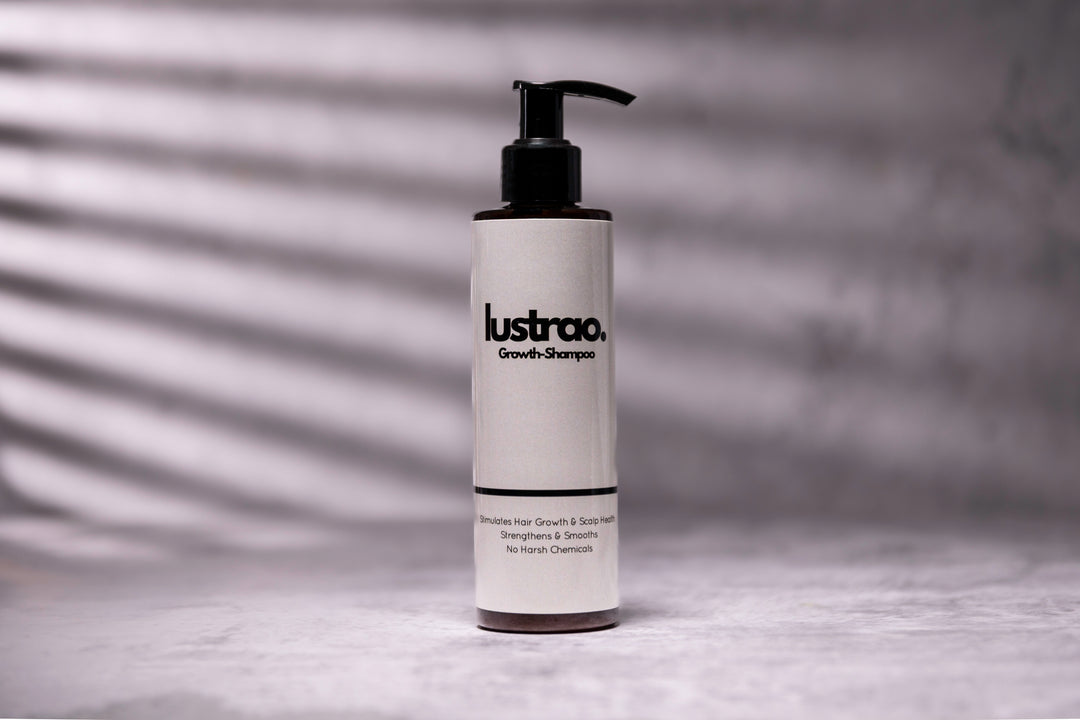
Lavender oil is one of the ingredients used in the Lustrao Growth Shampoo. It is included as part of a broader cosmetic formulation alongside ingredients such as Rosemary Oil, Peppermint Oil, Tea Tree Oil, Hydrolyzed Silk Protein, Hyaluronic Acid, and vitamins.
This approach recognises that hair care involves more than one consideration. Cleansing, conditioning, hydration, manageability, and scalp comfort all contribute to a hair-care routine.
Lavender oil is one component of that formulation, not a standalone solution expected to address every cause of hair loss.
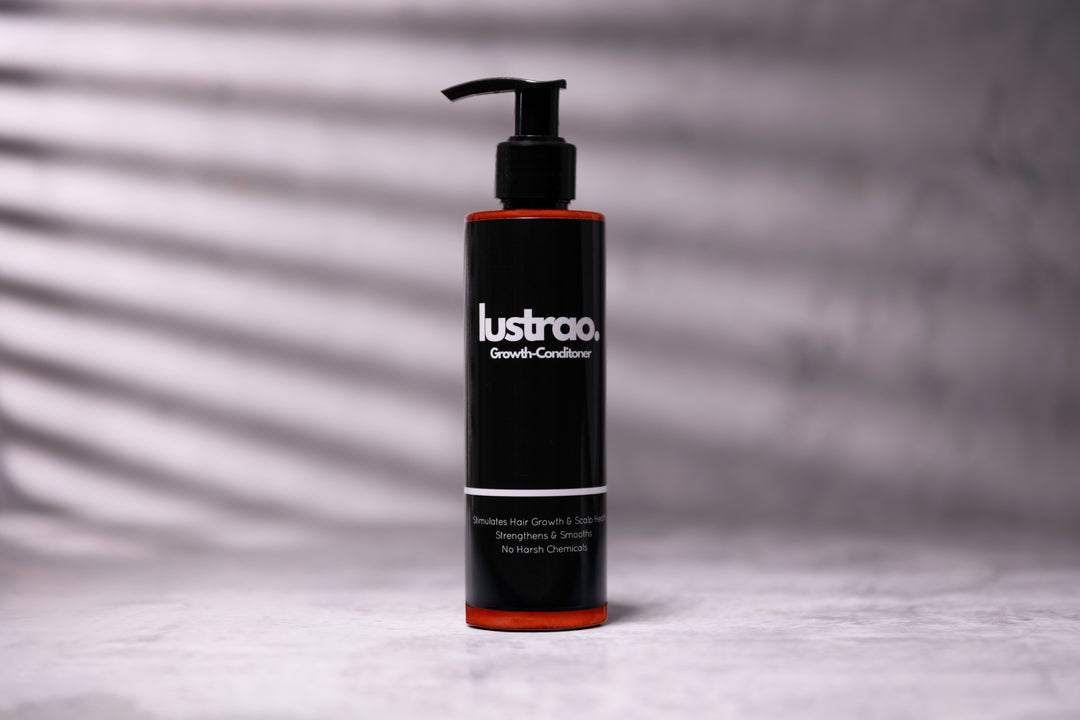
The Growth Shampoo can also be incorporated into the Lustrao Hair Growth Duo Consistency Kit, which combines shampoo and conditioner for a consistent hair-care routine.
The distinction is important: the presence of lavender oil in a cosmetic product does not mean that the finished product has been clinically proven to regrow hair. Product-specific efficacy claims require evidence appropriate to the finished formulation and the particular claim being made.
The Bottom Line: Does Lavender Oil Help Hair Growth?
Lavender oil is an interesting botanical ingredient with preliminary experimental evidence relating to hair growth.
A 2016 study found that topical lavender oil increased several hair-growth-related measurements in mice, including follicle number and follicle depth. However, these findings do not establish that lavender oil produces the same effects in humans.
At present, the strongest conclusion is that lavender oil is a promising subject for further hair-growth research, but it is not a clinically established human hair-regrowth treatment.
If your goal is healthier-looking hair, a consistent routine that combines gentle cleansing, conditioning, and reduced mechanical damage may help maintain the condition of your hair.
If you are experiencing persistent hair loss or progressive thinning, identifying the underlying cause remains the most important step.
The science is worth exploring, but the distinction between promising experimental findings and proven human outcomes should always remain clear.
Frequently Asked Questions
1. Does lavender oil help hair growth?
Lavender oil has shown hair-growth-promoting effects in an animal study, but there is insufficient human clinical evidence to confirm that it directly stimulates hair growth in people. More clinical research is needed to establish whether these findings translate to humans.
2. Can lavender oil regrow hair?
Lavender oil has not been established as a human hair-regrowth treatment. A 2016 study reported changes in hair follicle measurements in mice, but animal results cannot establish that the same effect occurs in people.
3. What did the 2016 lavender oil hair-growth study find?
Lee and colleagues investigated topical lavender oil in C57BL/6 mice over four weeks. The researchers reported increased hair follicle number, follicle depth, and dermal thickness in the lavender oil groups compared with controls. The study was conducted in animals, not humans.
4. Is lavender oil better than rosemary oil for hair growth?
Rosemary oil has human clinical evidence investigating hair growth, while lavender oil's most directly relevant evidence comes from an animal study. Neither should automatically be regarded as a proven replacement for established hair-loss treatments.
5. Can lavender oil help with hair loss?
There is not enough human clinical evidence to establish lavender oil as an effective treatment for hair loss. Hair loss can result from genetic, hormonal, nutritional, inflammatory, and other causes, so identifying the underlying condition is important.
6. Can I apply lavender essential oil directly to my scalp?
Undiluted lavender essential oil should not be applied directly to the scalp because it may cause irritation or allergic contact dermatitis. If you want to use lavender oil, choose an appropriately formulated product and follow its directions.
7. How often should I use lavender oil for hair growth?
There is no clinically established frequency for using lavender oil to regrow human hair. The frequency should depend on the specific formulation and its instructions, rather than the application schedule used in animal research.
8. Is lavender oil safe for all hair types?
Lavender oil may be suitable for some people when used in an appropriately formulated cosmetic product, but individual reactions vary. People with sensitive skin or fragrance allergies should be cautious and stop using a product if irritation develops.
References
-
Lee BH, Lee JS, Kim YC. Hair growth-promoting effects of lavender oil in C57BL/6 mice. Toxicological Research. 2016;32(2):103–108. Read the published study on PubMed.
-
Panahi Y, Taghizadeh M, Marzony ET, Sahebkar A. Rosemary oil vs minoxidil 2% for the treatment of androgenetic alopecia: a randomized comparative trial. SKINmed. 2015;13(1):15–21. Find the published study on PubMed.
-
DermNet New Zealand. Allergy to fragrance ingredients.
-
American Academy of Dermatology. Hair loss: Overview.
Share